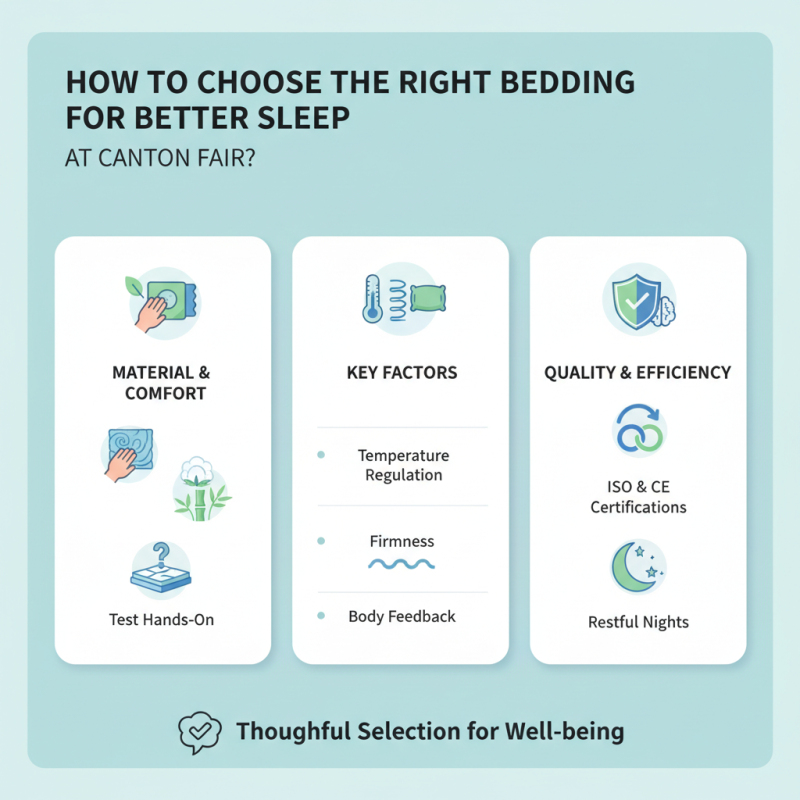
When attending the Canton Fair, it's essential to consider how to choose the right bedding for better sleep. With numerous options available, making an informed decision can be challenging. Factors such as material, firmness, and temperature regulation play a significant role in sleep quality. It is easy to overlook these details amid the excitement of the fair.
Exploring bedding options at the fair involves hands-on experience. Testing different materials, like cotton or bamboo, will help you assess comfort levels. You may find that some products do not meet your expectations. A mattress that feels good in the showroom might not be ideal at home. Pay attention to your body’s feedback during your search for the perfect bedding.
Navigating the fair requires efficiency. With AI tools enhancing your experience, consider how to select bedding that suits your sleep needs. Focus on certifications, such as ISO or CE, to ensure quality. Remember, making the right choice contributes to restful nights and improved well-being, highlighting the importance of thoughtful selection in this busy environment.
Choosing the right bedding is crucial for a good night's sleep. Sleep affects our health and mood. Poor bedding can lead to discomfort, tossing, and turning. It’s important to consider material, firmness, and temperature regulation. Soft cotton sheets can feel nice, but they may not always provide enough breathability. You might wake up feeling too hot or too cold.
The firmness of your mattress matters. A mattress that is too soft can lead to poor spinal alignment. But a mattress that is too firm may not provide the comfort needed. Finding the right balance is key. Some people prefer a little firmness for support alone, while others crave plush cushioning.
Consider the weight of your comforter too. Heavy blankets can feel cozy but may cause discomfort. A lighter alternative might be better for those warmer nights. Reflection on your personal preferences is vital. Tailor your choice to what makes you feel most comfortable. This can lead to improved sleep quality and well-being.
When selecting bedding at the Canton Fair, several factors come into play. Comfort is key, and materials matter. According to a report by the National Sleep Foundation, 73% of people sleep better on quality fabrics. Cotton and bamboo are popular for breathability. They offer softness and comfort, essential for a good night's sleep.
Another crucial aspect is thread count. Many believe higher thread counts mean better quality. However, a balance is important. Reports suggest that thread counts between 300 and 500 often provide optimal comfort. This range balances smoothness and durability. You may find some options misleading, with claims that seem too good to be true.
Moreover, consider durability. Many products may not withstand regular use. Look for warranties or guarantees. Research indicates that consumers often regret not checking this aspect. A little reflection can save future headaches. Explore all options at the fair. Engage with manufacturers about their products thoroughly. What materials are used? Have they been tested for durability? Understanding these elements can lead to better choices for sleep quality.
| Factor | Description | Importance Level |
|---|---|---|
| Material | Choose breathable and soft materials like cotton or bamboo for comfort. | High |
| Thread Count | A higher thread count can imply greater softness and durability. | Medium |
| Weight | Consider weight for seasonal comfort; lighter for summer and heavier for winter. | High |
| Color & Design | Select calming colors and designs that promote relaxation. | Medium |
| Care Instructions | Consider ease of cleaning; machine washable options are preferable. | Low |
Choosing the right bedding can greatly influence your sleep quality. Various types of bedding materials offer distinct benefits.
Cotton is breathable and soft, making it an excellent choice for comfort.
Bamboo sheets are eco-friendly and moisture-wicking, keeping you cool at night.
Linen offers durability and unique textures but can be a bit rough initially.
When buying bedding, consider how it feels against your skin. Some people prefer silky materials, while others enjoy the crispness of cotton. If you have allergies, hypoallergenic options like microfiber might work better for you.
Tips: Test different fabrics in-store if possible. Don’t rush your decision.
Take home samples when available. Evaluate how each type holds up after washing.
Bedding choice is often overlooked but essential. Reflect on how your bedding impacts your sleep.
Look for materials that enhance your nightly rest.
When exploring bedding options at the Canton Fair, focus on four key aspects. Look for fabric quality. A soft, breathable material can enhance sleep comfort. Check for certifications ensuring safety and comfort. High thread counts often indicate better durability. However, don’t let the numbers deceive you. Sometimes, a lower count feels just as good.
Next, evaluate the mattress and pillow support. Test them personally if possible. Sit down, roll over, and feel the firmness. Some pillows may seem plush but can disturb your sleep. Take notes on your impressions. It’s easy to forget that perfect fit amid the excitement of the fair.
Pay attention to smell, too. New bedding can have an off-putting odor. This may indicate poor materials. Observe how the bedding feels against your skin—soft and inviting, or rough and irritating? Don't hesitate to ask about return policies. This reflection can save hassle later.
Choosing bedding that aligns with personal sleep preferences can greatly enhance sleep quality. A survey from the National Sleep Foundation indicates that 73% of people experience improved sleep when they feel comfortable in their bedding. Factors such as fabric type, thread count, and fill material play vital roles in this comfort.
For many, the choice between cotton and polyester can be a dilemma. Natural fibers like cotton allow better breathability and moisture control. In contrast, synthetic options may offer durability but often lack the same comfort. Another crucial aspect is thread count; studies show that ideal counts range from 200 to 800. Higher thread counts do not always translate to softness. It’s essential to test and feel the fabric personally.
People often overlook their unique sleep positions. Side sleepers may benefit from softer, thicker pillows to support their neck. Back sleepers might need medium-firm options for spinal alignment. An uncomfortable pillow can disrupt sleep, and 60% of individuals report wanting better support. Reflecting on these details helps create a tailored bedding experience, leading to restful nights.
: The right bedding affects our sleep quality, health, and mood. Poor choices can lead to discomfort and restless nights.
Focus on material and breathability. Soft cotton may feel nice but can trap heat.
Firmness impacts spinal alignment. Too soft can cause issues, while too firm may lack comfort. Finding balance is essential.
Heavy blankets can feel cozy but might cause discomfort. Lighter options are often better for warm nights.
Look for fabric quality, check certifications, and consider thread count, but don’t be misled by numbers.
Yes, it’s crucial. Sit down and assess firmness. Some plush pillows can be misleading and disrupt sleep.
Smell can indicate poor materials. A pleasant scent usually suggests better quality.
Always ask about return policies. This can prevent hassle later if the bedding doesn’t meet your expectations.
Think about what feels comfortable. Assessing personal needs can improve sleep quality in the long run.
It’s easy to forget details during the excitement. Notes help you remember which options felt best.
Choosing the right bedding is crucial for achieving better sleep, and the Canton Fair offers a unique opportunity to explore various options. When considering how to choose the right bedding for better sleep, it is essential to understand the importance of materials, designs, and individual preferences. Factors such as sleep position, temperature regulation, and material sensitivity should guide selections at the fair.
To enhance your bedding experience, explore different materials like cotton, linen, and memory foam, each with its benefits. Evaluating quality and comfort involves checking the stitching, feel, and durability of the products. Finally, aligning bedding choices with personal sleep needs will ensure a restful night. By following these guidelines, attendees can make informed decisions that promote better sleep and overall well-being.

Texdura Textile